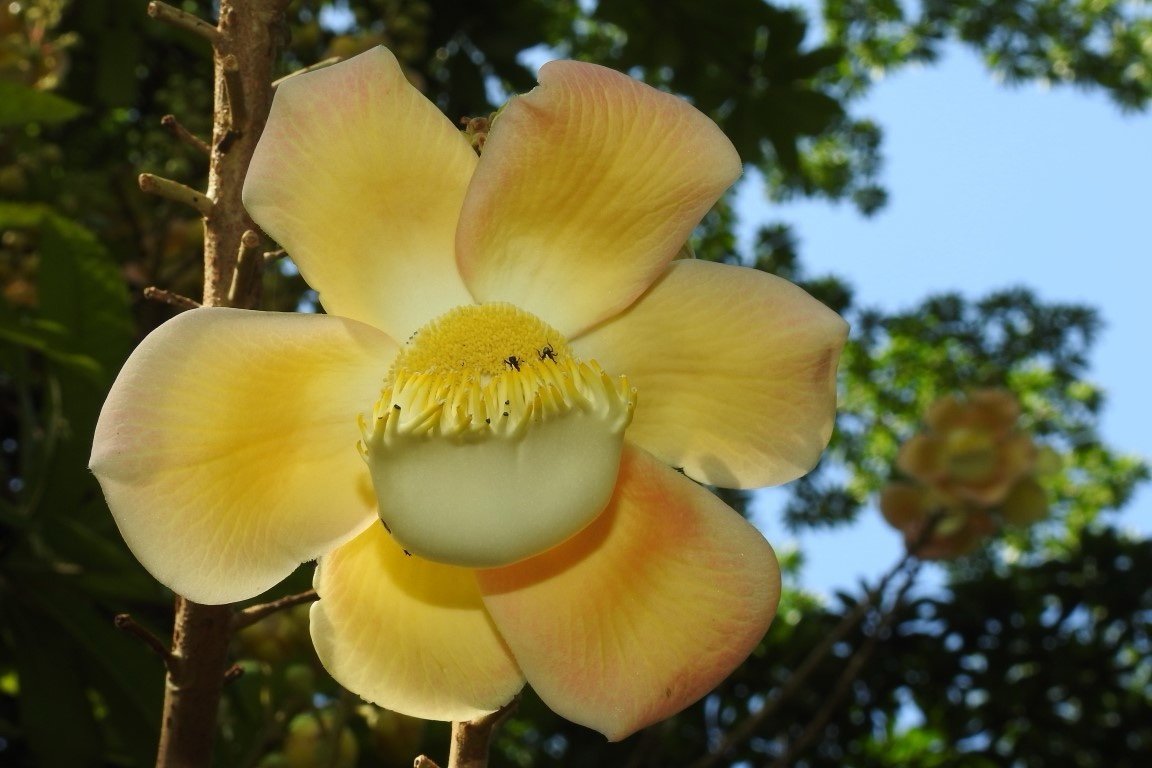
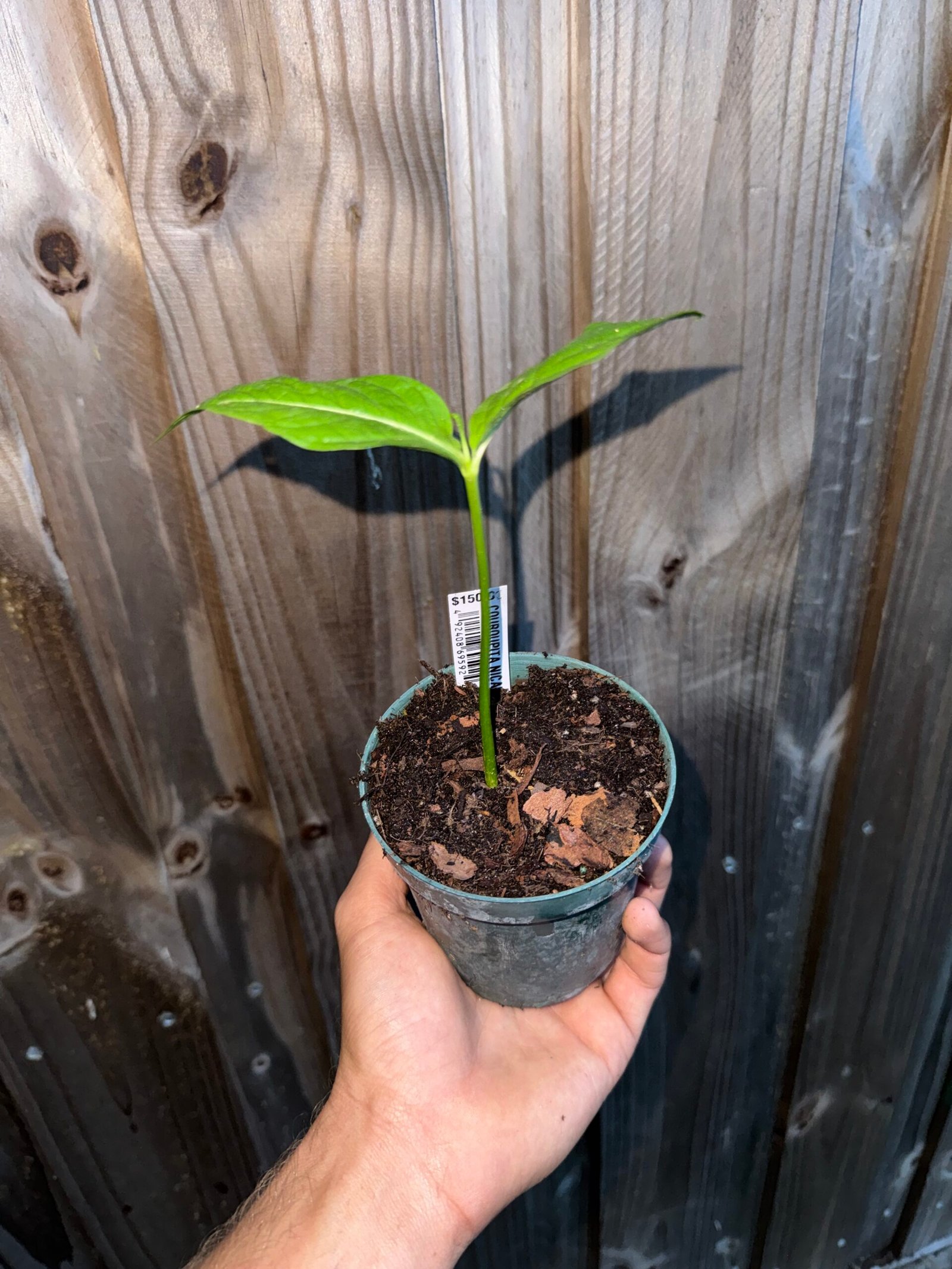
While the standard cannonball tree (Couroupita guianensis) is already considered a prized exotic rarity, this critically endangered Central American native is exponentially harder to find. Known traditionally as the Paraíso tree, it represents a pinnacle acquisition for serious collectors, large estate landscapes, and conservation-minded gardeners looking to cultivate an incredibly exclusive piece of living history.
The defining feature of this magnificent tropical specimen is its dramatic cauliflory, a rare botanical phenomenon where flowers and fruits bypass branches entirely to grow directly from the main trunk. During its extended blooming season, thick, tangled vines erupt from the bark, blanketed in massive, cup-shaped pink, cream, and yellow blossoms. Every morning, these flowers open to release an intoxicatingly sweet, heavy fragrance that fills the surrounding air, before dropping at dusk to make way for the next day’s stunning display.
Following the spectacular blooms, the tree develops its signature large, heavy, spherical woody fruits that hang like sculptures against the trunk. Because Couroupita nicaraguarensis is critically endangered in its native habitats of Central and South America, cultivating this tree plays a vital role in global plant preservation. It provides an unmatched, jaw-dropping focal point that effortlessly transforms any large tropical landscape into a private botanical sanctuary.
To thrive, this stately tree requires specific tropical conditions that mimic its native rainforest home. It is best suited for outdoor growth in USDA Hardiness Zones 10b through 12 and must be strictly protected from frost and freezing temperatures. It requires a spacious outdoor planting area clear of structures and walkways due to its potential mature height of 50 to 75 feet and its heavy falling fruit. For optimal blooming, plant it in full sun to partial shade using rich, highly fertile organic soil, and ensure it receives consistent, deep moisture year-round.


Reviews
There are no reviews yet.